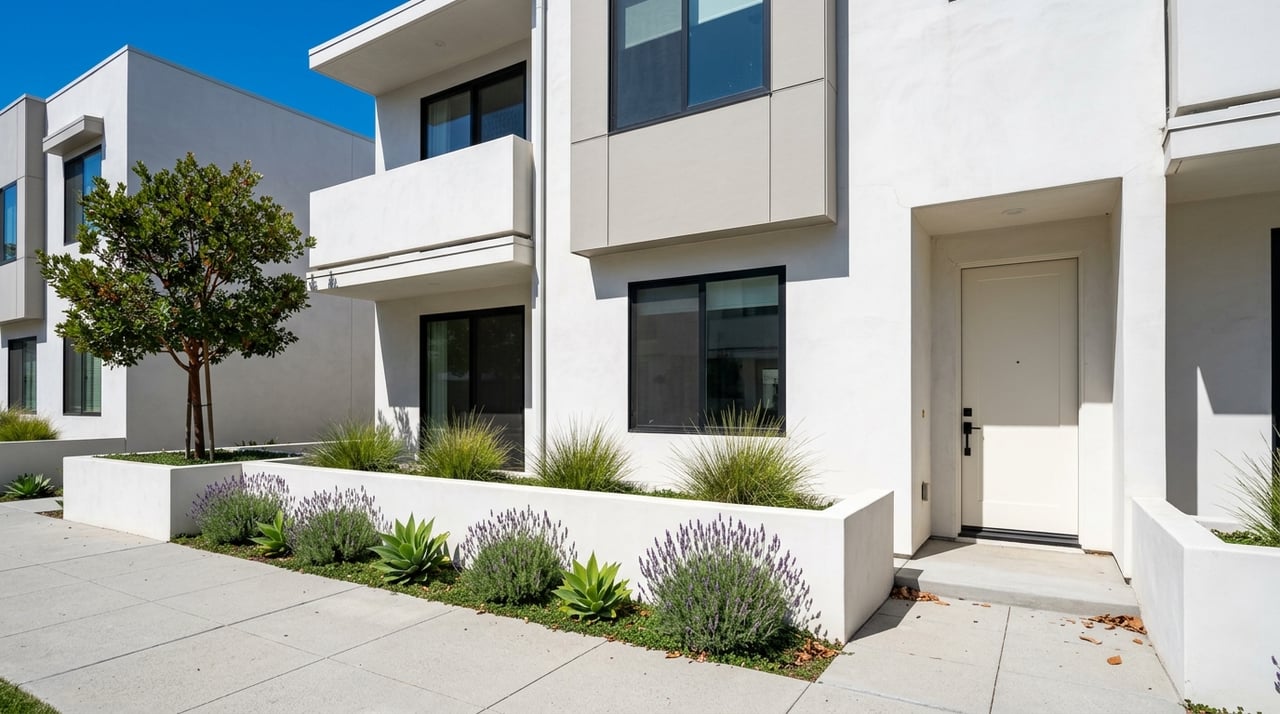
Wondering if a condo or townhome in Antioch could be your best path into homeownership? If you are trying to balance price, monthly costs, and long-term value, attached homes can look very appealing at first glance. The good news is that Antioch offers lower entry points than many nearby markets, but the details behind the listing matter just as much as the sticker price. Let’s dive in.
Antioch attached homes at a glance
Antioch remains one of the more affordable housing markets in the region by local standards. The City of Antioch’s 2025 CAPER reported a median home price of $597,000, while current Redfin data show a median sale price of $614,632 across all home types.
Attached homes are often priced well below detached houses. Redfin’s current Antioch data show median sale prices of about $305,060 for townhouses and $244,907 for condo and co-op units, compared with $619,685 for single-family homes. Current listings also show roughly 19 condos at a median list price of $185,000 and 9 townhouses at $394,000.
For many buyers, that price gap is the main reason to look at condos and townhomes in Antioch. A lower purchase price may help you get into the market sooner, especially if you are a first-time buyer or trying to keep your down payment manageable.
Why the label can be misleading
One of the biggest mistakes buyers make is assuming a townhome always works the same way legally. In California, the Department of Real Estate says a townhome is an architectural style, not a legal ownership category.
That means two homes that look very similar from the outside can come with very different ownership rights and responsibilities. One may be a condominium, while another may be part of a planned development.
This matters because your title documents and CC&Rs determine what you actually own. Depending on the property, you may own only the interior space, or you may own the structure and lot, with certain shared or exclusive-use areas like patios or driveways.
What to confirm before you offer
Before you write an offer on a condo or townhome in Antioch, you should get clear on the basics of maintenance and restrictions. The answers can affect both your monthly budget and your day-to-day experience as an owner.
Here are a few key questions to ask early:
- Who maintains the roof?
- Who handles exterior siding and common areas?
- Are there rental restrictions?
- Are there unresolved violations involving the unit or association?
- Are there recent board minutes that suggest upcoming repairs or policy changes?
In California, Civil Code 4525 requires the seller to provide important association documents. These include governing documents, the most recent annual budget and reserve documents, current assessments and fees, unpaid assessments and fines, unresolved violation notices, any rental prohibition in the governing documents, requested board minutes from the prior 12 months, and the latest inspection report.
That disclosure package is not just paperwork. It helps you understand what you are buying beyond the walls of the unit.
HOA dues change the real monthly payment
A condo or townhome may have a lower sale price than a detached home, but that does not always mean a lower total monthly cost. HOA dues can significantly change your affordability picture.
According to the CFPB, HOA dues are usually paid separately from your mortgage and can range from a few hundred dollars per month to more than $1,000. That means you should look at the full monthly payment, not just principal and interest.
In many communities, dues help pay for exterior maintenance and common-area upkeep. They may also cover services such as water, sewer, trash, and certain amenities.
That can be helpful, but you still need to know exactly what is included. Two homes with similar prices can have very different monthly ownership costs once dues, insurance, and reserves are factored in.
Reserve health matters more than many buyers think
The financial condition of the HOA is a major part of your risk as a buyer. If the association is underfunded, owners may face special assessments or deferred maintenance.
California law requires reserve planning and regular review. Civil Code 5550 requires a reserve study with a visual inspection at least every three years, plus an annual review. The study must identify major components, estimate repair or replacement costs, and describe the funding plan.
Civil Code 5570 also requires a reserve funding disclosure showing projected funding over the next five years. In addition, Civil Code 5300 requires the annual budget report to include a summary of the association’s insurance policies, including property, general liability, earthquake, flood, and fidelity insurance.
When you review the HOA packet, pay close attention to these questions:
- How much money is in reserves?
- What percent funded is the reserve account?
- When was the last reserve study completed?
- Are any special assessments planned?
- Are there pending lawsuits or unresolved violations?
- What do the dues actually cover?
- Are rentals limited by the governing documents?
These details can tell you a lot about the project’s stability and future costs.
Insurance is not always as simple as buyers expect
Insurance for attached homes can be confusing. Many buyers assume the HOA’s master policy covers everything, but that is not usually the case.
For condos in particular, the master insurance policy usually covers common areas. You still may need your own coverage for the interior of the unit, personal property, and certain deductibles.
California’s annual budget disclosures also warn that the association’s policies may not cover the owner’s property or all deductibles. That is why it is important to ask what the HOA insures and what you would need to insure yourself.
Financing can make or break the deal
Financing is often where condos and townhomes differ most from detached homes. Even if you qualify personally, the project itself may also need to meet lender standards.
Fannie Mae says lenders review project-level risks such as financial stability, condition, litigation, and insurance coverage. New condo projects, newly converted projects, or communities still under developer control may face tighter review than more established ones.
HUD says FHA condo approval also depends on factors like insurance, financial condition, title, pending legal action, and physical condition. In practical terms, you want to know early whether the project is considered warrantable under conventional lending guidelines.
This is one reason the lowest-priced unit is not always the easiest one to buy. Antioch’s CAPER notes that some lower-priced condos can be difficult to finance when reserve requirements or property condition issues prevent the project from meeting lender or investor standards.
Compare total cost, not just down payment
A lower purchase price can be attractive, especially if you are trying to buy sooner. The CFPB notes that FHA loans can require as little as 3.5% down, while conventional Fannie Mae and Freddie Mac loans can require as little as 3% down.
Still, the smarter comparison is the total housing payment. A home with a lower price but higher HOA dues or added insurance needs may cost more each month than you expect.
When you compare Antioch condos, townhomes, and single-family homes, stack up these numbers side by side:
- Purchase price
- Estimated down payment
- Principal and interest
- Property taxes
- HOA dues
- Homeowners insurance
- Any likely maintenance not covered by the HOA
That side-by-side view usually gives you a much clearer answer than list price alone.
Antioch’s housing pipeline offers more attached-home options
If you are thinking longer term, it is worth knowing that attached housing remains part of Antioch’s development pipeline. The city’s Planning Division lists several projects that include townhome-style housing.
These include 159 townhome condominiums at Wildflower Station, a 138-unit townhome project at Slatten Ranch, and a 168-unit townhome project at Wildflower Townhomes 2. Other project records also show a townhome mix of 84 two-bedroom and 27 three-bedroom units.
That is a useful reminder for buyers who want more than a one-bedroom condo but still want an attached-home price point. In Antioch, many townhomes may fall in the two- to three-bedroom range and may be built in multi-story layouts.
Local help for Antioch buyers
If you are buying your first home in Antioch, local assistance may also be worth exploring. The City’s Antioch Home Ownership Program, or AHOP, offers down payment and closing cost assistance along with homebuyer education and counseling.
The AHOP page says funding is now available, and applicants must complete a 6-hour HUD homebuyer education course before applying. For some buyers, that support can make a meaningful difference in getting from planning to purchase.
Programs like this can be especially helpful when you are trying to balance down payment needs with closing costs, reserves, and monthly HOA dues.
Smart steps before you buy
If you are serious about buying a condo or townhome in Antioch, a little extra review upfront can protect you from expensive surprises later. Attached homes can absolutely be a smart move, but they reward careful due diligence.
Here is a practical checklist to keep in mind:
- Confirm the legal structure of the property
- Review the CC&Rs and HOA rules
- Read the budget, reserve study, and reserve funding disclosure
- Ask about special assessments, litigation, and violations
- Verify what the HOA covers for maintenance and insurance
- Check whether the project meets lender guidelines
- Compare the full monthly cost, not just the sale price
The right condo or townhome can offer a more affordable path into Antioch homeownership. The key is making sure the numbers, documents, and project condition all work for your goals.
If you want help comparing Antioch condos, townhomes, and other entry-point options, the team at MVP Real Estate can guide you through the numbers, the HOA review, and the local market so you can buy with confidence.
FAQs
What is the difference between a condo and a townhome in Antioch?
- In California, a townhome is an architectural style, not a legal ownership type. In Antioch, a townhome may legally be a condominium or part of a planned development, so you need to review the title documents and CC&Rs to know what you actually own.
Are condos in Antioch cheaper than single-family homes?
- Based on current Redfin data in the research report, Antioch condos and co-ops have a much lower median sale price than single-family homes, and townhomes are also priced lower on average.
What HOA documents should Antioch condo buyers review?
- California Civil Code 4525 requires disclosure of governing documents, budgets, reserve documents, assessments, fines, violation notices, rental restrictions, requested board minutes from the prior 12 months, and the latest inspection report.
Do Antioch townhomes always have HOA dues?
- Many attached homes have HOA dues, but the amount and what they cover can vary by project. You should confirm the monthly dues, services included, and reserve health before making an offer.
Can Antioch condos be harder to finance?
- Yes. Lenders may review the entire project, including reserves, insurance, litigation, and condition, and some lower-priced Antioch condos may be difficult to finance if the project does not meet lending standards.
Is there down payment help for first-time buyers in Antioch?
- Yes. The City of Antioch’s AHOP program offers down payment and closing cost assistance, along with homebuyer education and counseling, for eligible buyers.